
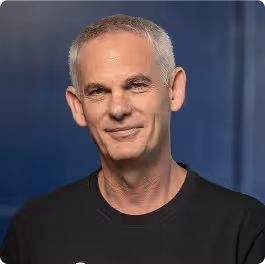

At Coinbase, my co-founder, Nir Steinherz, and I led a cryptographic migration protecting hundreds of billions of dollars in assets. It taught us that changing cryptography across a large organization is as much a program management challenge as a technical one: you decide which systems to protect first, coordinate the teams that own them, and verify that each change worked. That experience shaped Q.security.
Today, Q.security is coming out of stealth with $11.5M in seed funding, led by Castle Island Ventures. Q is the business-first PQC (post-quantum cryptography) remediation platform that keeps enterprises crypto-agile. It starts from their business, discovers the cryptography that protects it, helps decide what to fix first and turn those priorities into work their teams can carry out, and verifies each fix.
Why we started Q.security
Our work on post-quantum cryptography began nearly a decade ago, when we helped Citi assess what was then an emerging risk, and even implemented experimental PQC in production. Unbound Security, which I co-founded and Nir later joined, co-submitted LIMA, a first-round candidate in NIST's post-quantum standardization process, before Coinbase acquired the company. Back then, PQC was a long-range question. Today, it comes with dates.
Why PQC can't wait
Many CISOs tell us they are drowning in AI-related security issues and today's attacks, and can't take on tomorrow's problems too. We understand the pressure. But with PQC, tomorrow's problems start today. Long-lived data harvested now can be decrypted later. A sufficiently capable quantum computer could also forge the digital signatures that authenticate services and verify software updates. NIST will deprecate RSA and elliptic-curve cryptography after 2030 and disallow them under its standards after 2035. Sensitive US federal systems face deadlines at the end of 2030 and 2031. And past cryptographic migrations, NIST notes, took more than a decade.
The good news is that the standards are ready: NIST finalized the first three in August 2024. The market is moving too: Google, Cloudflare and Microsoft have each set 2029 targets for their own migration, and the large banks and insurers we speak with are already at work.
What we believe
We believe in starting now, without panic. PQC is doable when smartly orchestrated.
Start with the business. Once teams decide to move, the next question is always the same: "Where do we start?" Ask where a compromise would do the most damage, how long the data at stake must stay confidential, and where vulnerable cryptography is exposed. Then fix the highest-risk cryptography first. That way, your first efforts protect what matters most to the business.
Deliver recurring wins. Work in waves, not one long waterfall, and take each wave from discovery to done. Start, for example, with a service that sends records which must stay confidential for decades, over connections that still use quantum-vulnerable key exchange. That traffic can be harvested today, which makes the service a strong candidate for the first wave. With Q, the team that owns it gets a ticket with a runbook, and the finding stays open until validation shows those connections are using post-quantum key exchange. After each wave, the CISO can report which priority services were fixed and how each fix was verified.
Stay ready. As NIST puts it, this transition "will certainly not be the last one required." The lasting goal is crypto-agility: an organization that can change its cryptography whenever threats or standards change. That's why the CISO should own PQC as an ongoing program.
Handled this way, the quantum transition becomes an opportunity. Enterprises that start now will come out of it with a clear view of their cryptography and the ability to adapt it for whatever comes next.
The people behind Q
Nir and I are building Q with a team that brings decades of experience in enterprise cryptography, guided by an advisory board of leaders in cryptography and enterprise infrastructure:
- Prof. Yehuda Lindell, Head of Cryptography at Coinbase, one of the world's leading cryptographers
- Dr. Avesta Hojjati, CTO of Netwrix, who led global engineering teams at DigiCert and is an expert in PKI and post-quantum cryptography
- Eyal Barkay, former VP Cloud at Walmart, who oversaw one of the largest hybrid clouds in the world and led fleet-wide migrations
We're grateful to our investors for backing this vision: Castle Island Ventures, New York Life Ventures, Coinbase Ventures, Fin Capital, SBI US Gateway Fund, Plug and Play and Ground Up Ventures, as well as angel investor Ofir Ehrlich, co-founder and CEO of Eon.
Looking ahead
We built Q to accelerate the transition to a quantum-safe world by enabling every enterprise to know, control and evolve its cryptography. Today is our first public step. If you're asking where to start, talk to us and see how Q helps you plan your first wave.
Remediate Now. Stay Secure.
Read the full press release here.